
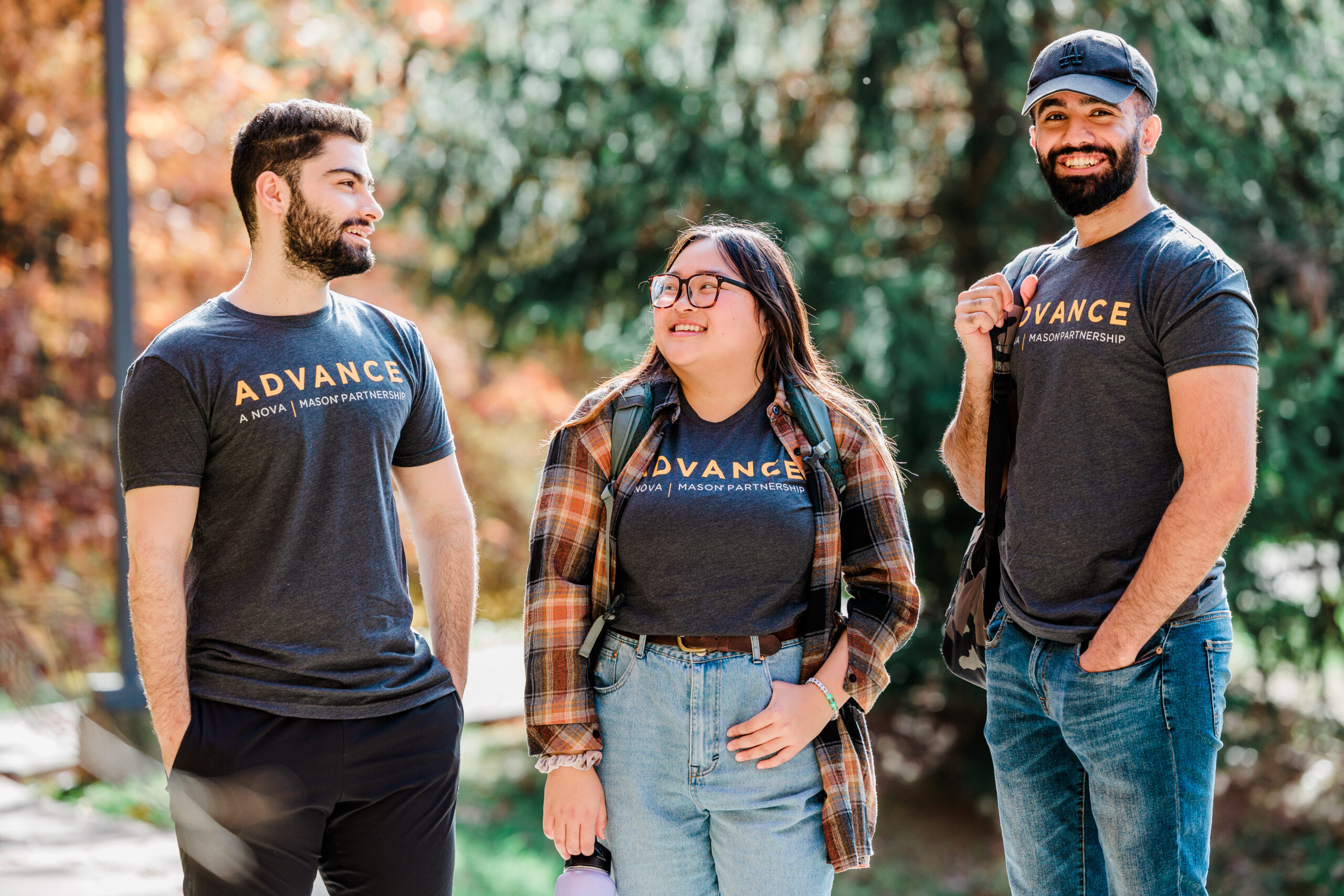
NOVA puts student success into practice through ADVANCE, its partnership with George Mason University. The co-enrollment program creates a direct route from an associate degree at NOVA to a bachelor’s degree at George Mason, simplifying transfer and controlling the cost of completing college.
Credit loss is an affordability issue. In report GAO-17-574, the U.S. Government Accountability Office estimated that students who transferred between 2004 and 2009 lost an average of 43% of their credits. Students transferring from public two-year to public four-year institutions lost an average of 22%. These historical national findings illustrate the challenge ADVANCE is designed to address.
The financial stakes are substantial. At George Mason’s 2026–27 in-state undergraduate tuition rate of $448 per credit hour, replacing a three-credit course would represent $1,344 in tuition before mandatory and course fees. As an illustration, a 22% loss from 60 earned credits would equal 13.2 credits, or approximately $5,914 in replacement tuition at that rate. This is an illustrative calculation, not a measured ADVANCE savings figure or an individual tuition bill; actual costs depend on enrollment, applicable charges and aid. Extra coursework may also add living expenses, use financial aid eligibility and delay entry into the workforce.
ADVANCE addresses these risks through early academic planning and personalized support. Students select an aligned pathway that identifies the courses needed for their intended degree. Academic coaches at NOVA and success coaches at George Mason help students follow that pathway through transfer and bachelor’s completion. Students who meet the required milestones transition to George Mason without an additional application. Together, these features are designed to help students take courses that count toward their selected major and avoid unnecessary expense.
For NOVA, affordable access must also translate to affordable completion. ADVANCE shows how a community college and a public university can coordinate pathways and support so students’ tuition dollars and time contribute to a completed bachelor’s degree.