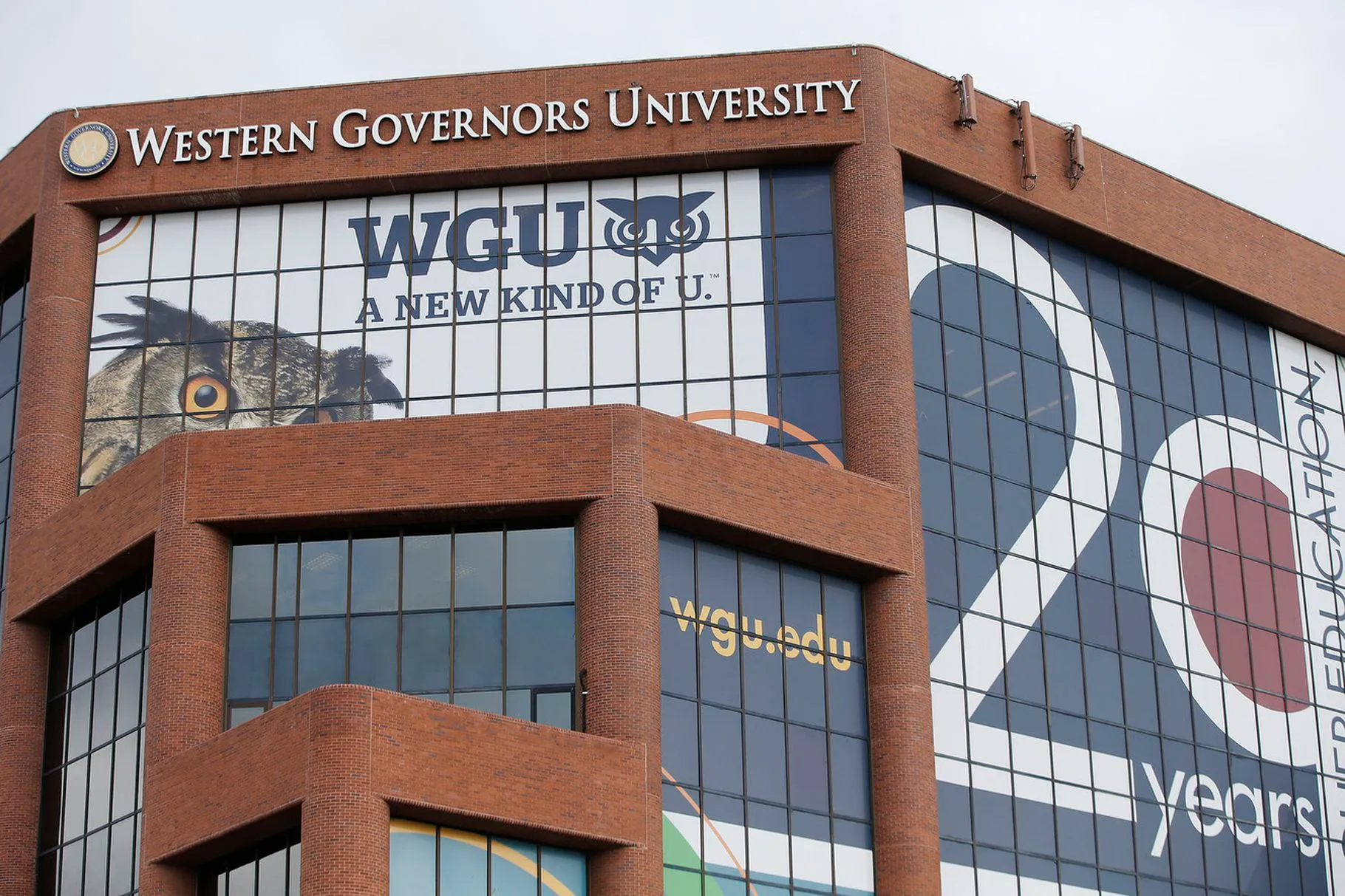
Western Governors University
Western Governors University (WGU) is a nonprofit, online university founded in 1997 by 19 U.S. governors to expand access to affordable, high-quality higher education. WGU’s competency-based model awards credit for demonstrated mastery rather than seat time, so students can progress as quickly as they learn. Students pay a flat-rate tuition per six-month term and work with a mentor on a personalized program plan. In fiscal year 2026, WGU awarded its 500,000th degree and enrolled nearly 197,000 students in 122 degree programs and 23 certificate programs across four schools: the School of Business, School of Education, School of Technology, and Leavitt School of Health. WGU is accredited by the Northwest Commission on Colleges and Universities and describes itself as the only university to have received regional accreditation from four regional accrediting commissions at the same time.
wgu.edu
Return on Investment
 Return on Investment
WGU measures its impact through three Key Results: completion, return for graduates, and equity in access and attainment. More than 90% of WGU students bring prior college experience, so federal first-time graduation measures leave most of them out, and WGU reports its own completion rates alongside them. Return is calculated from verified income data: a WGU degree is estimated to deliver 29 times its cost over a graduate's remaining career, and 87% of alumni say it was worth the cost.
The programs below are the ones the institution put forward against this commitment, with the outcomes it reports against each.
- Median income change from graduation to two years after graduation
- $14,671Median income change from graduation to two years after graduation
- Factored Graduate Return for the FY23 cohort, using two-year post-graduation income data
- 29xFactored Graduate Return for the FY23 cohort, using two-year post-graduation income data
- Alumni said WGU was worth the cost, compared with 64% nationally
- 87%Alumni said WGU was worth the cost, compared with 64% nationally
- Graduation rate for non-first-time students
- 55%Graduation rate for non-first-time students

Affordability
 Affordability
WGU keeps costs low and predictable by charging a flat rate for each six-month term, so students who move faster through competency-based coursework pay less overall. Transfer credit for prior college learning (up to 75% of a program, after an official evaluation), transfer partnerships with 706 community colleges, and the Responsible Borrowing Initiative help students shorten their path and borrow only what they need. In FY26, WGU also awarded $40 million in scholarships.
The programs below are the ones the institution put forward against this commitment, with the outcomes it reports against each.
- Average annual undergraduate tuition and fees, compared with a national average of $18,241
- $8,730Average annual undergraduate tuition and fees, compared with a national average of $18,241
- Median debt at graduation for undergraduates who borrowed, down from $12,615 in FY25
- $11,900Median debt at graduation for undergraduates who borrowed, down from $12,615 in FY25
- of undergraduates borrow the recommended amount through the Responsible Borrowing Initiative
- 58%of undergraduates borrow the recommended amount through the Responsible Borrowing Initiative
- in scholarships awarded to 14,437 students, including $2.5 million in emergency aid
- $40 millionin scholarships awarded to 14,437 students, including $2.5 million in emergency aid

Academic Excellence
 Academic Excellence
WGU's competency-based model asks students to demonstrate mastery rather than log seat time. Each student works with a program mentor, receives course-level support from instructors, and has assessments scored by a separate team of evaluators using common rubrics; in FY26, students completed 3.5 million course tasks and passed 2.9 million assessments. New AI tools, such as the Academic Virtual Assistant, are designed to strengthen human support, and WGU launched 12 new and five redeveloped degree programs. WGU is accredited by the Northwest Commission on Colleges and Universities (NWCCU).
The programs below are the ones the institution put forward against this commitment, with the outcomes it reports against each.
- of students rated their entire educational experience good or excellent, compared with 86% at other institutions
- 92%of students rated their entire educational experience good or excellent, compared with 86% at other institutions
- Acquired job-related knowledge and skills, compared with 66% at other institutions
- 81%Acquired job-related knowledge and skills, compared with 66% at other institutions
- of students said WGU provides support to help students succeed academically, compared with 74% at other institutions
- 82%of students said WGU provides support to help students succeed academically, compared with 74% at other institutions
- course tasks completed and 2.9 million assessments passed in FY26
- 3.5 millioncourse tasks completed and 2.9 million assessments passed in FY26
- Academic ExcellenceWestern Governors UniversityCreating an Education Students Value with Personalized SupportWGU students rate their educational experience, academic support, and job-relevant learning well above students at other institutions.

- Academic ExcellenceWestern Governors UniversityStudents Helping Students to Accelerate Academic MomentumStudents using peer coaching completed their next course two days faster and achieved higher course-completion rates than matched nonparticipants.

Career Pathways
 Career Pathways
WGU's Career & Professional Development team offers students and alumni free one-on-one career coaching, resume and interview support, and employer connections through WGU Handshake, virtual hiring events, and the Ask A Grad micro-mentoring platform, with services available to alumni for life. Work-based learning and employer partnerships extend that support: in FY26, the School of Business engaged 3,300 students in work-based learning, and more than 140,000 students used the WGU Achievement Wallet to document verified skills for employers. Programs that lead to licensure include student teaching or clinical experiences.
The programs below are the ones the institution put forward against this commitment, with the outcomes it reports against each.
- of employers would hire another WGU graduate (2025 Harris Poll Employer Survey)
- 87%of employers would hire another WGU graduate (2025 Harris Poll Employer Survey)
- of employers rate WGU graduates equal to or better than graduates from other institutions in workplace soft skills
- 95%of employers rate WGU graduates equal to or better than graduates from other institutions in workplace soft skills
- students used the Achievement Wallet, documenting more than 1.7 million verified skills
- 140,000+students used the Achievement Wallet, documenting more than 1.7 million verified skills
- active workforce partnerships
- 1,934active workforce partnerships